"Keycloak vs Auth0" usually comes down to one question dressed up as a feature comparison: do you want to run a server, or pay someone else to run it for you? Both handle the actual job, login, SSO, MFA, social connections, MFA, user management, competently. The real decision is about cost at scale, who controls your user data, and how much DevOps work you're willing to take on.
We deploy Keycloak for clients specifically because it's marketed as an Auth0 alternative, our own AWS AMI tagline says exactly that. This is the honest version of that pitch, including where Auth0 is genuinely the better call.
Quick answer
Jump to a section
How to choose between Keycloak and Auth0
Three questions do most of the work:
- Do you have anyone who can run a server? Keycloak needs someone to deploy, patch, and back it up (see what a production setup on AWS involves). If the honest answer is "not really," Auth0's managed model removes that problem entirely.
- Where do you expect your user count to land? Under a few thousand monthly active users, Auth0's free tier is genuinely hard to beat. Past that, the per-MAU math starts favoring a self-hosted option fast, especially for B2B pricing where Auth0's plans start at $150 to $800 a month.
- Does your user data need to stay off a third party's infrastructure? Auth0 is now part of Okta, so your user records live on Okta's cloud. If that's a compliance or trust problem, Keycloak self-hosted removes the question outright.
Keycloak: free, self-hosted, standards-first
Keycloak is Apache 2.0 licensed and has been solving SSO since 2014, originally built by Red Hat and now developed as an independent open source project. Version 26.7 (July 2026) added a SCIM API in preview and simplified multi-cluster high availability. There's no feature-gated enterprise edition of the open source project itself, Red Hat's paid offering is the same software with a support SLA attached, not a different product.
Key features
- Single sign-on, identity brokering, and user federation built in
- Fine-grained authorization with no add-on required
- Realm-based multi-tenancy for isolating applications or customers
- Standards-based: OIDC, OAuth2, and SAML, all supported natively
- Full control over where user data physically lives
Pros
- Zero license cost regardless of how many users you authenticate
- Your user data stays on infrastructure you control
- A decade-plus of production use and community troubleshooting knowledge
Cons
- You own server maintenance, patching, and backups
- Admin console is functional but feels dated next to Auth0's dashboard
- Fewer pre-built social and enterprise connectors than Auth0 ships out of the box
Auth0: managed identity, zero infrastructure
Auth0, now part of Okta, is the polished, fully managed alternative. The free tier covers up to 25,000 monthly active users with unlimited logins and social connections, genuinely generous for a small app or an early-stage product. Past that, paid tiers split by use case: Essentials starts at $35/month (B2C) or $150/month (B2B) for 500 MAUs, and Professional starts at $240/month (B2C) or $800/month (B2B), adding MFA, RBAC, SSO integrations, and Actions for custom logic.
Key features
- Fully managed, no server to run, patch, or scale yourself
- Free tier up to 25,000 monthly active users, no credit card required
- Wide library of social and enterprise identity connectors
- Actions for custom authentication logic without managing your own infrastructure
- Backed by Okta's compliance certifications and global uptime record
Pros
- Genuinely zero maintenance, someone else runs the infrastructure
- Free tier alone covers most small apps and early-stage products
- Polished dashboard and fast path to production for a small team
Cons
- Costs climb quickly past the free tier, especially on B2B plans
- Your user data lives on Okta's infrastructure, not your own
- Deep customization eventually pushes you toward the more expensive tiers
Keycloak pricing vs Auth0 pricing
Keycloak pricing is simple because there isn't any, the open source project is Apache 2.0 and free at any scale. What you pay for is the server, an EC2 instance or equivalent, sized for your traffic. Optional paid support exists (Red Hat Build of Keycloak) if you want an SLA, but it's genuinely optional.
Auth0's pricing is where the "free forever" pitch runs into limits. The 25,000 MAU free tier is real and generous, but the moment you need production features like MFA, RBAC, or SSO connections past that ceiling, you're on a paid tier, and B2B pricing in particular jumps to $150 or $800 a month starting points rather than a gentle per-seat ramp. For a small consumer app under the free tier, Auth0 is effectively free. For a growing B2B product, the bill escalates faster than most teams expect.
Keycloak vs Auth0: feature comparison
| Feature | Keycloak | Auth0 |
|---|---|---|
| License / model | Apache 2.0, self-hosted | Proprietary, managed SaaS |
| Pricing | Free, pay only for your server | Free to 25,000 MAU, then $35-$800+/mo |
| SSO / OIDC / SAML | Yes, native | Yes, native |
| MFA | Built in, free | Gated behind paid tiers |
| Social login connectors | Supported, smaller library | Extensive out of the box |
| Server maintenance | Your responsibility | None, fully managed |
| Data location | Your infrastructure | Okta's infrastructure |
| Admin dashboard | Functional, traditional | Polished, modern |
| Custom logic / extensibility | Full backend access | Actions (sandboxed) |
| Best for | Cost control and data sovereignty at scale | Fast setup with no infrastructure to manage |
Why we deploy Keycloak for clients
Most teams that come to us evaluating Auth0 have already done the MAU math and didn't love where the line was heading. Keycloak removes the per-user pricing question entirely and keeps identity data on infrastructure the client actually controls, which matters a lot more once compliance or procurement gets involved. We package it as a ready-to-launch AWS AMI, so the setup that normally takes a few days, database, realms, TLS, reverse proxy, is done before the instance finishes booting.
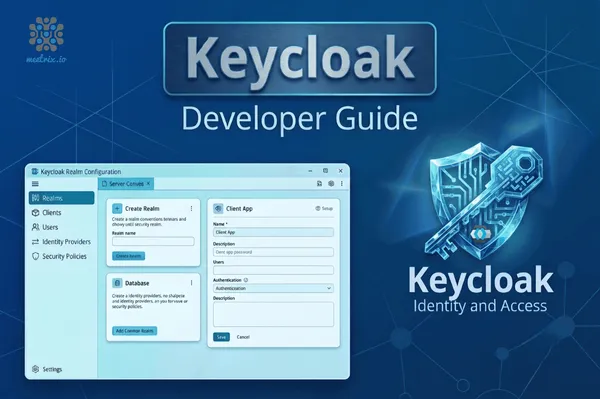
Our Keycloak developer guide covers the full manual deployment if you'd rather run it yourself first, and if you're also comparing self-hosted options, our Authentik developer guide covers the other open source IdP we deploy, with a more modern flow-based admin UI.
Where I'd start
Small app, small team, nobody wants to run a server: Auth0's free tier is the fast path and it's genuinely free until you're well past a hobby project's user count. Growing past a few thousand users, on a B2B pricing track, or your data has to stay off a third party's infrastructure: Keycloak, and start sizing the server now rather than after the Auth0 invoice doubles.
The migration path exists either direction, both speak standard OIDC and SAML, so you're not locking yourself out of switching later if the calculation changes.
Frequently Asked Questions
Keycloak vs Auth0: which is cheaper?
Keycloak, almost always, once you're past a trivial user count. It's Apache 2.0 and free regardless of how many users you have, you only pay for the server. Auth0's free tier covers 25,000 monthly active users, generous, but its paid plans start at $35 to $800 a month once you need production features like MFA or SSO past that.
What is a good Auth0 alternative open source?
Keycloak is the most established one. It covers SSO, identity brokering, user federation, and fine-grained authorization with no license fee and no enterprise gate on the open source project itself.
Is there an Auth0 self hosted alternative?
Yes, Keycloak is the closest match, self-hosted, standards-based (OIDC, SAML, OAuth2), and free. Authentik is another self-hosted option with a more modern admin UI, if you want to compare both before picking.
What is Keycloak pricing really, is it actually free?
Keycloak the open source project has no pricing, it's Apache 2.0 licensed with every feature available for free. The only cost is the server you run it on. Red Hat sells a supported downstream build (Red Hat Build of Keycloak) with an SLA, but that's optional support, not a license fee.
Why would a team choose Auth0 over Keycloak?
Zero server maintenance, a generous free tier for smaller apps, and a polished dashboard with wide social and enterprise connector support out of the box. If nobody on the team wants to run infrastructure, Auth0's managed model is worth the eventual per-MAU cost.
Why would a team choose Keycloak over Auth0?
Cost at scale and data control. Once you're past a few thousand monthly active users, Auth0's pricing adds up fast, and your user data lives on Okta's infrastructure either way. Keycloak has neither problem, at the cost of running the server yourself.
Launch Keycloak on AWS as Your Auth0 Alternative
Launch a pre-configured Keycloak server on AWS, ready to use as a self-hosted Auth0 alternative with no per-user pricing.
Get Keycloak on AWS Marketplace