Open-source OpenShift alternative

Self-hosted Rancher on AWS

Run Rancher, the open-source Kubernetes management platform from SUSE, in your own AWS account. Create new clusters, import the ones you already run, and manage users, access and apps across all of them from one dashboard.

  • Ready in 5-10 minutes
  • Apache 2.0 licensed
  • Manages EKS, AKS and GKE
Rancher Kubernetes management deployed on AWS by Meetrix

What is Rancher?

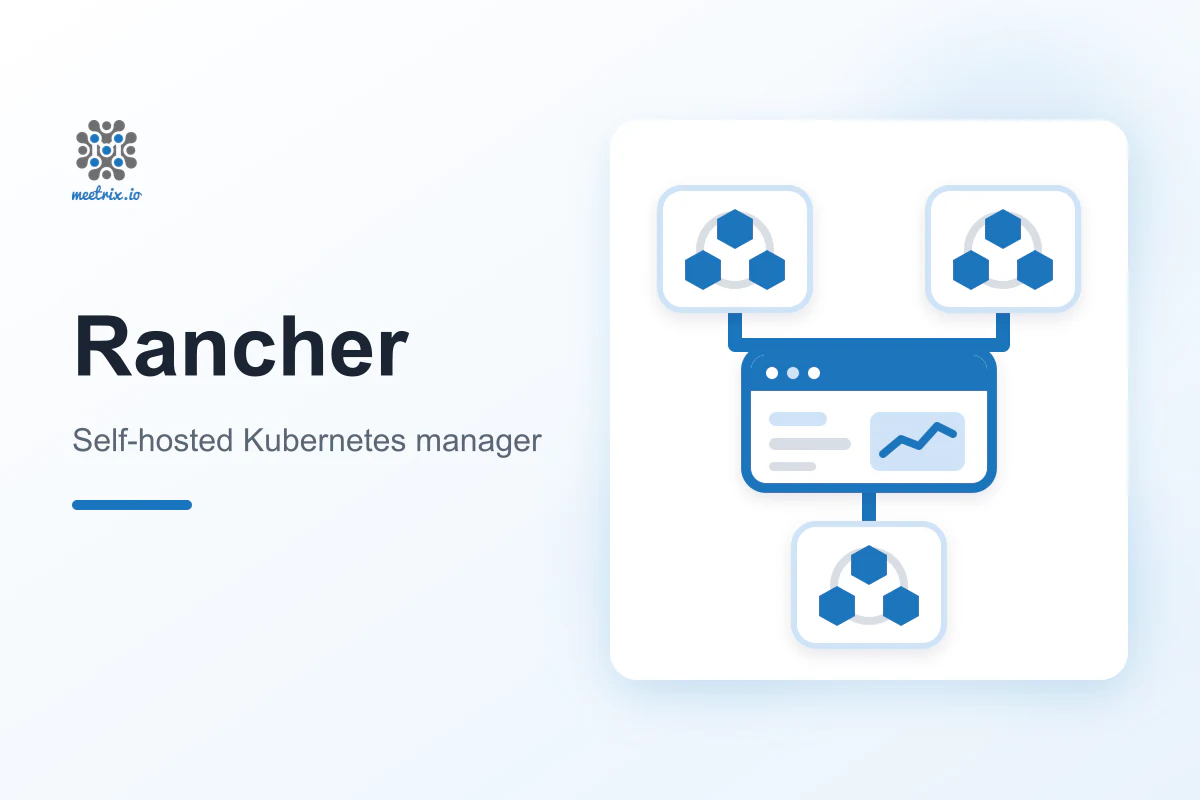
Rancher is an Apache 2.0, open-source container management platform that addresses the operational and security challenges of managing multiple Kubernetes clusters. It suits platform and DevOps teams that run more than one cluster, across clouds or on-premises, and want one place to control them.

What's in the Meetrix Rancher AMI

The AMI ships Rancher running on a K3s cluster on Ubuntu, so the dashboard is ready when the stack finishes.

How to set up a self-hosted Rancher server

  1. Launch the stack

    Subscribe on AWS Marketplace and launch the CloudFormation stack with your domain and admin password. Allow 5-10 minutes.

  2. Point your domain

    Create a Route 53 A record for your domain with the PublicIp from the stack outputs.

  3. Sign in

    Open the DashboardUrl, enter the AdminPassword you set, and confirm the server URL.

  4. Add your clusters

    Create a new cluster or import an existing one, such as Amazon EKS, from the Rancher home page.

Deploy on AWS

Rancher vs Red Hat OpenShift

RancherRed Hat OpenShift
LicenceApache 2.0, open sourceSubscription
Kubernetes clustersRKE2, K3s, EKS, AKS, GKE and imported clustersOpenShift clusters
Multi-cluster managementBuilt inAdvanced Cluster Management add-on
Managed service on AWSNo, runs in your own AWS accountYes, ROSA
Self-managed optionYesYes, self-managed editions

Rancher FAQ

What is Rancher?

An open-source platform from SUSE for creating, importing and managing Kubernetes clusters from one dashboard, with central authentication, role-based access, monitoring and an app catalog.

Is Rancher free to self-host?

Yes. Rancher is Apache 2.0 licensed. On AWS you pay for the instance and any Meetrix software fee shown on the listing. SUSE sells Rancher Prime separately, with 24x7 support.

Which clusters can Rancher manage?

RKE2 and K3s clusters it provisions, hosted Kubernetes services such as Amazon EKS, Azure AKS and Google GKE, and existing clusters you import.

How do I sign in the first time?

Open the DashboardUrl from the stack outputs and enter the AdminPassword you set when launching the stack, then confirm the server URL.

Does it set up SSL?

Yes, automatically when your domain is hosted on Route 53. If that fails, a script on the server generates the certificate manually.

Which instance size should I choose?

t3a.large is the recommended starting point. Size up if Rancher will manage many clusters or nodes.

How do I upgrade?

Back up your server data, remove the old stack and launch the new version from AWS Marketplace.

How does Rancher compare with Red Hat OpenShift?

Rancher is open source and manages many Kubernetes distributions, including EKS, AKS and GKE. OpenShift is a subscription platform with its own clusters, and its multi-cluster management is an add-on.

Need a hand with Rancher?

We run Kubernetes for video, AI and web workloads every day, from GPU scheduling to multi-cluster setups. Tell us what you need.

Contact us