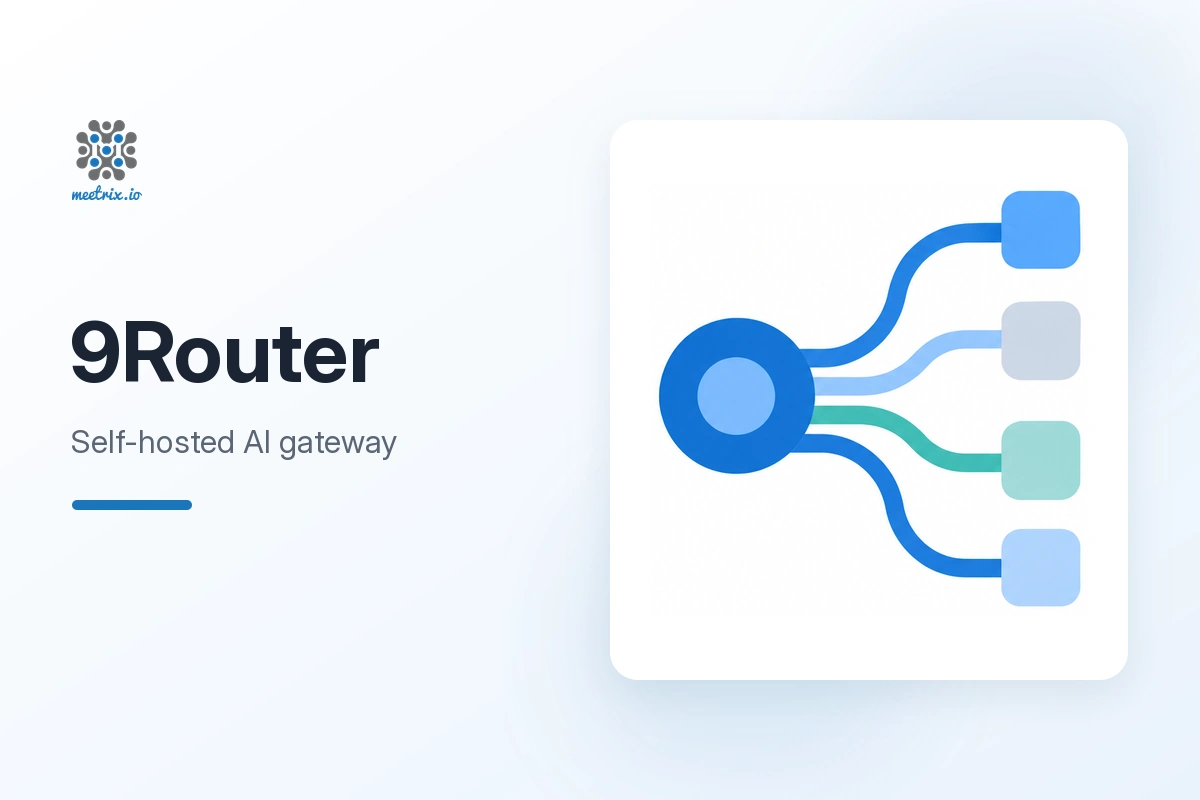
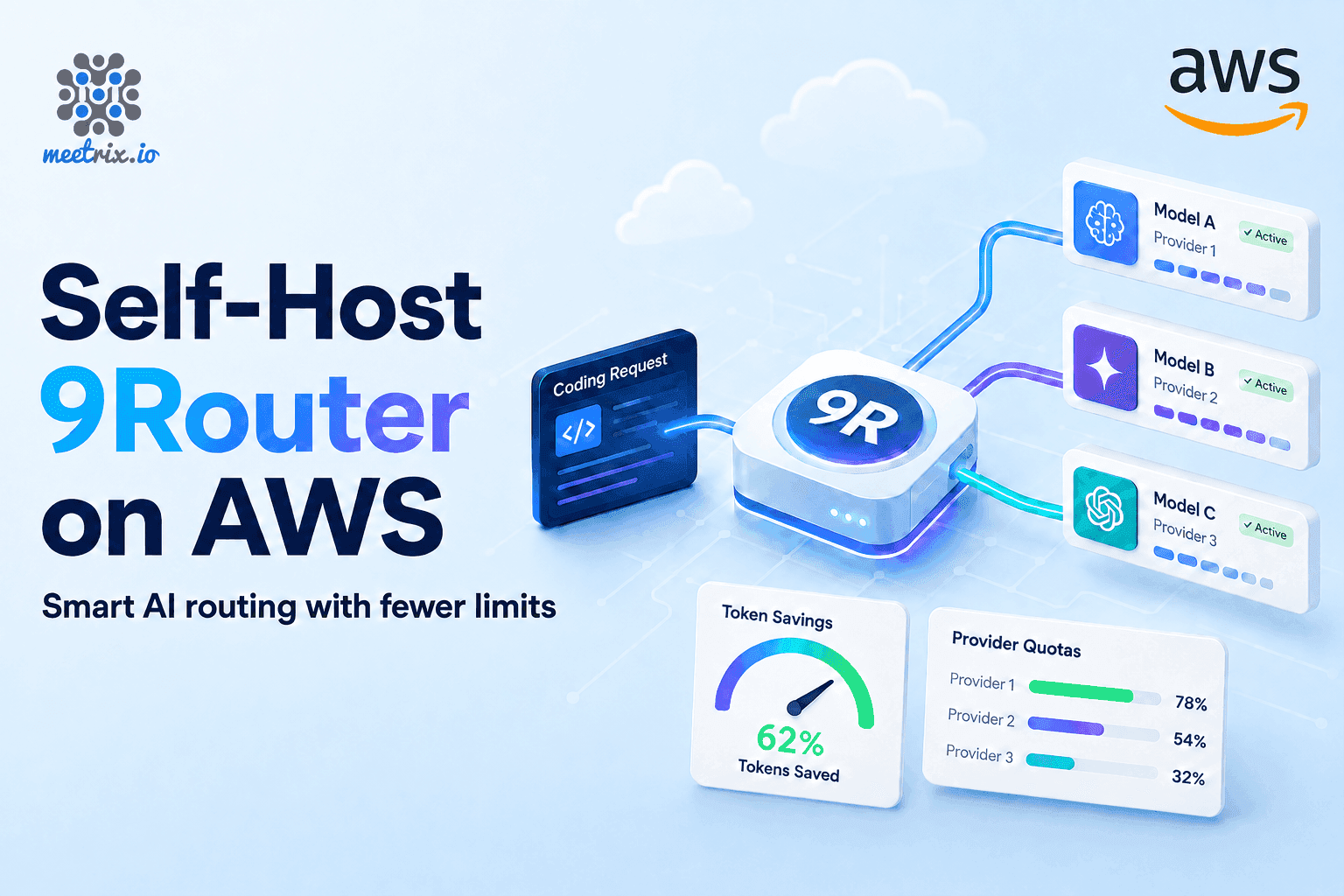
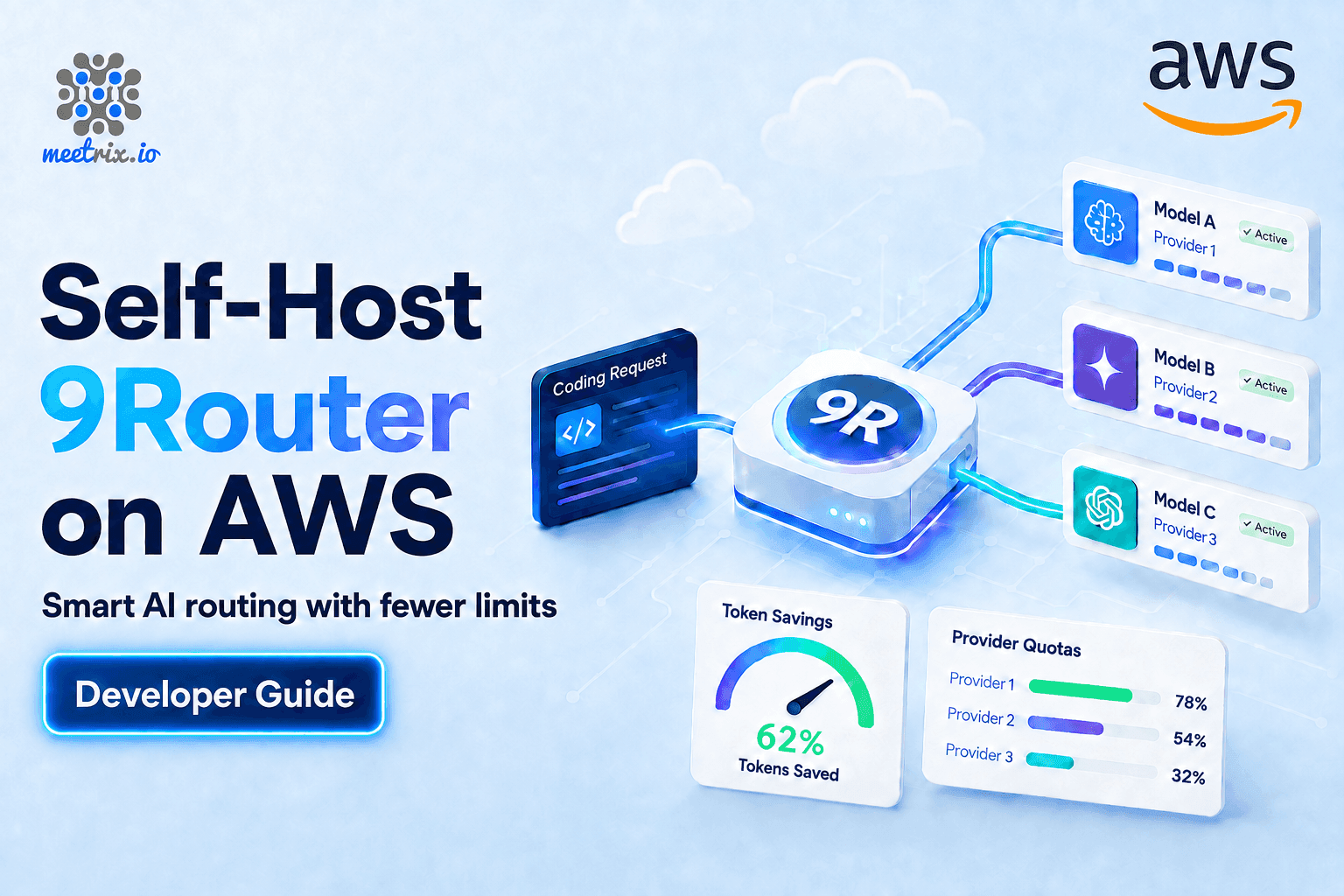
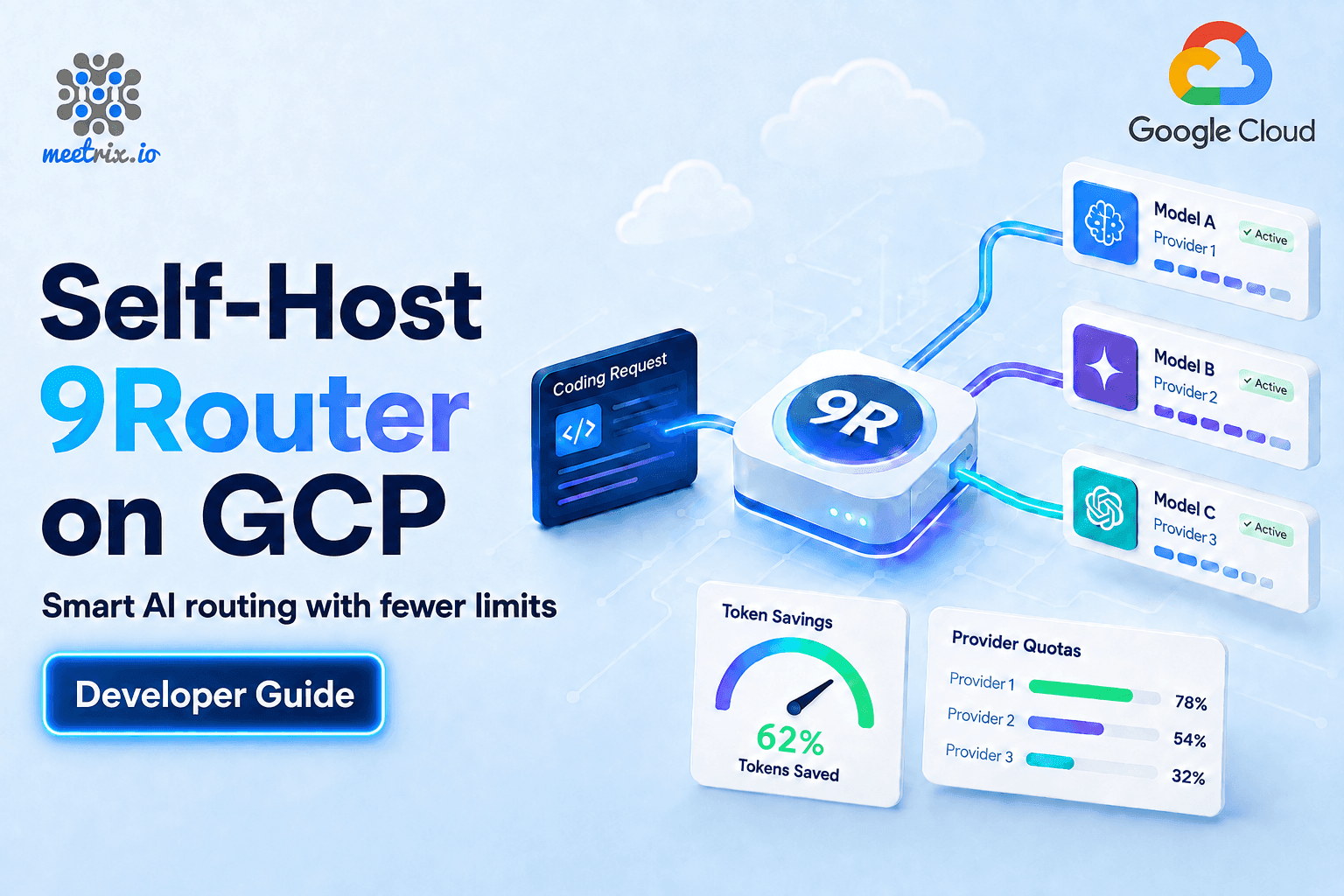
What is 9Router?
An open-source smart router between your AI coding tools and your model providers. It exposes one OpenAI-compatible endpoint, translates between OpenAI, Claude and Gemini formats, tracks quota and falls back automatically when a provider runs out.
Which providers can I connect?
More than 40. Start with a free tier such as Kiro AI, connect a paid subscription, or add your own API key for Anthropic, OpenAI or Google. 9Router routes across everything you connect.
How do I point Claude Code or Cursor at it?
Copy your API key from the Endpoint page in the dashboard, set the tool's base URL to https://your-domain/v1 and pick a model in the form provider/model. Any OpenAI-compatible tool works the same way.
How do I log in the first time?
Use the initial password you set at deployment; the username field is not used. Change the password from the dashboard after your first login.
How much does the RTK token saver save?
Roughly 20-40% of input tokens, by compressing tool output before it reaches the model. The exact saving depends on how verbose your tools' output is.
Is my data backed up?
State lives in SQLite on a persistent disk and survives restarts. The helper script /opt/scripts/dbbackup.sh takes a gzipped backup (to your S3 bucket on AWS), but it is not scheduled, so run it yourself or add a cron entry.
Which machine size should I choose?
t3a.small on AWS or e2-small on Google Cloud is enough for one user or a small team. Choose a larger machine for heavy concurrent traffic.
Where does everything run?
On the server in your own AWS account or GCP project. Provider keys, routing rules and request history stay there, not on Meetrix's infrastructure or a third-party billing layer.